
Santa Cruz County’s housing market is famous for its coastline, redwood landscapes, distinctive towns, and limited supply of homes. It is also a market where broad countywide headlines can be misleading. A beach-adjacent home in Capitola, a family home in Scotts Valley, a cottage in Felton, and a condominium in Watsonville may appeal to very different buyers and respond to different pricing pressures. Understanding those differences is more useful than treating the county as one uniform market.
This guide explains the factors that shape local property values, compares the county’s major lifestyle areas, and puts current market figures in context. The goal is not to assign a permanent price label to any community. Instead, it is to help buyers, sellers, and owners recognize what tends to influence value, how to read current statistics, and why a property’s condition, location, and pricing strategy can matter as much as its ZIP code.
Santa Cruz County Market Snapshot: July 2026
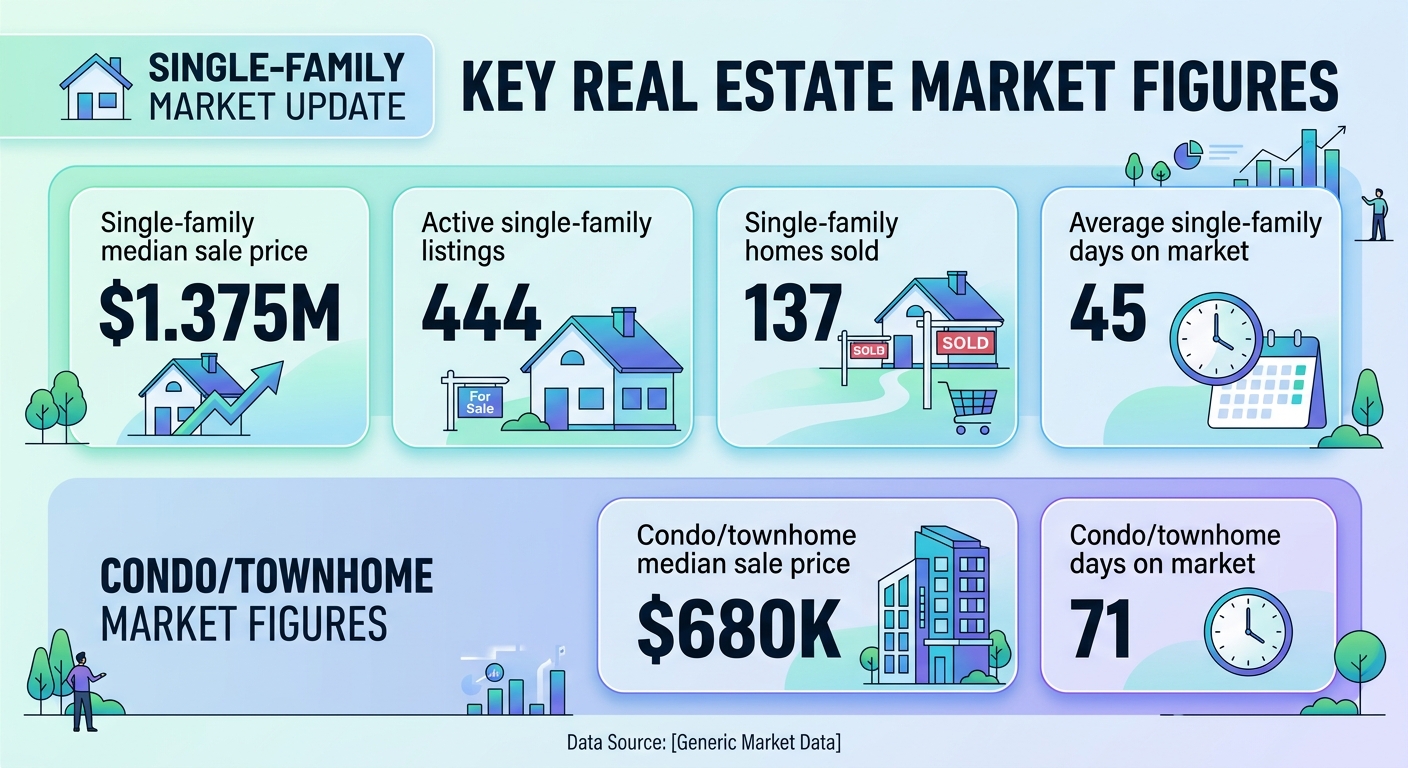
The latest countywide statistics from the Santa Cruz County Association of REALTORS® show a market with meaningful selection, but continuing strength for desirable single-family homes. In July 2026, there were 444 active single-family residence listings, 185 new listings, and 137 closed sales. The average time on market was 45 days. The average closed price was $1,614,520 and the median closed price was $1,375,000.
| July 2026 countywide metric | Single-family residences | Condominiums and townhouses |
|---|---|---|
| Current inventory | 444 | 125 |
| New listings | 185 | 50 |
| Homes sold | 137 | 35 |
| Days on market | 45 | 71 |
| Average sale price | $1,614,520 | $679,349 |
| Median sale price | $1,375,000 | $680,000 |
These figures are useful indicators, not appraisals. A median is the middle sale in a group: half of the reported sales were above it and half were below it. An average can be pulled higher by a small number of luxury transactions, particularly in a county where oceanfront, estate, and view properties can sell at substantially higher prices. For that reason, a homeowner should not apply the $1.375 million single-family median to a specific house without considering its neighborhood, lot, condition, views, access, and comparable recent sales.
Compared with July 2025, the July 2026 single-family market recorded fewer active listings (444 versus 552), fewer closings (137 versus 142), and a longer average marketing period (45 versus 29 days). The median price was $1,375,000 in July 2026, compared with $1,395,500 a year earlier. That mix suggests a market where buyers can be more selective than they were during the fastest-moving periods, while well-positioned homes still command substantial prices. In the condominium and townhome segment, July 2026 inventory was 125 units, 35 sold, and the median sale price was $680,000; this segment also had a longer 71-day average marketing period.
What Drives Value Locally
Location remains the starting point. Homes near the Pacific, Monterey Bay, beaches, village centers, and established commercial districts often command a premium because they combine scenery, recreation, walkability, and a limited number of buildable sites. Ocean views can be valuable, but buyers also evaluate privacy, wind exposure, parking, road access, and the practical condition of coastal structures. A property advertised as “near the beach” is not interchangeable with a property that can be walked to the water or one with unobstructed views.
Access and daily convenience also shape demand. Commute routes toward Santa Cruz, Silicon Valley, Watsonville, and Highway 1; proximity to schools and services; internet reliability; and access to medical care, groceries, parks, and restaurants all influence the buyer pool. In rural and mountain communities, the experience of the drive, road maintenance, emergency access, insurance availability, and the availability of utilities can influence value as materially as a home’s square footage.
Housing type matters. The single-family figures above should not be used to describe condos or townhouses, which are a separate market with different entry prices, homeowner association dues, financing considerations, and buyer preferences. A condominium may provide an accessible way to live nearer to town or the coast, while a detached home may offer a yard, flexibility, and privacy. Neither is automatically a better value; the relevant question is whether the property matches the buyer’s intended use and total carrying costs.
Finally, presentation and condition have an outsized role. Buyers often pay more for homes that are clean, repaired, well photographed, and priced in line with comparable sales. Deferred maintenance, drainage concerns, unusual floor plans, unpermitted work, aging roofs, foundation issues, and insurance constraints can narrow the pool of qualified buyers. In a market with more time for due diligence, sellers should expect those details to receive close attention.
Coastal and Urban Lifestyle Areas
Santa Cruz and Beach Hill
Santa Cruz offers a broad range of property types, from historic neighborhoods and downtown-adjacent homes to hillside properties and beach-oriented enclaves. Beach Hill is often associated with proximity to the Santa Cruz Beach Boardwalk, the wharf, downtown amenities, and bay views. Its appeal is rooted in lifestyle as much as architecture: buyers may value walkability, access to restaurants and cultural venues, and the ability to enjoy the waterfront without a long drive.
That appeal comes with tradeoffs. Homes close to active visitor areas may face more traffic, parking pressure, noise, and neighborhood activity than buyers expect. Older coastal housing can also involve maintenance needs. Buyers comparing Santa Cruz properties should consider a home’s micro-location, exposure, usable outdoor space, flood and hazard disclosures where relevant, and whether the property supports their primary-residence, second-home, or rental goals. Sellers should avoid assuming that proximity alone offsets condition or pricing issues.
Capitola and Capitola Village
Capitola is prized for its recognizable village setting, beach access, colorful architecture, dining, and small-town coastal identity. Housing near Capitola Village can be especially scarce, and a property’s walkability, parking, views, and degree of privacy can make large differences in buyer interest. The broader Capitola area includes a wider variety of homes and condominium communities, so a village-adjacent listing should be compared with genuinely similar properties rather than with the entire city.
Coastal buyers should conduct careful due diligence. The age and condition of a home, drainage, seawall or bluff-related issues where applicable, flood exposure, insurance terms, and any homeowner association documents can materially affect ownership costs. For sellers, straightforward disclosures, repair records, and thoughtful preparation help buyers evaluate an older or coastal property with confidence.
Live Oak
Live Oak occupies a practical middle ground between Santa Cruz and Capitola. Its central location, access to shops and services, and proximity to beaches make it attractive to buyers who want coastal access without necessarily paying for a village address or ocean view. The housing stock is varied, with older single-family residences, remodeled homes, and condominium options. Because Live Oak includes many micro-neighborhoods, values can vary with street character, proximity to major roads, parking, lot utility, and the quality of updates.
For buyers, Live Oak can reward a close reading of block-by-block differences. For sellers, it is especially important to show how a home functions day to day: outdoor space, storage, parking, home-office potential, and access to nearby amenities may be as persuasive as broad neighborhood branding.
Family, Village, and South-County Areas
Scotts Valley
Scotts Valley is often considered by buyers seeking a suburban setting, local services, and access to both Santa Cruz and the Santa Clara Valley. Its housing mix includes established neighborhoods, newer communities, townhomes, and homes in more wooded settings. Demand is often influenced by commute patterns, school preferences, lot usability, and access to shopping and recreation. A home’s elevation, sun exposure, road access, and proximity to everyday services can affect its market position.
Rather than treating Scotts Valley as a single high-value category, buyers should compare similar homes by age, lot size, condition, and location within the city. Sellers can benefit from explaining improvements that reduce ownership uncertainty—such as roof, drainage, heating, electrical, or wildfire-hardening work—because buyers may weigh them heavily.
Aptos and the Aptos Hills
Aptos combines beaches, state parks, golf, neighborhood shopping areas, and a broad selection of residential environments. Some buyers are drawn to the coastal side of Aptos for beach access and a relaxed setting; others seek larger lots or more privacy in the hills. The range is a strength, but it also makes broad pricing statements unreliable. A newer home with views, an inland ranch house, a beach cottage, and a condominium can occupy very different market segments even when they share an Aptos mailing address.
Important variables include slope and drainage, road and driveway access, sun, tree cover, permit history, septic or utility arrangements where applicable, and proximity to Highway 1. Buyers should budget for inspections tailored to the property, not simply a standard checklist. Sellers should price against recent comparable sales with similar terrain and amenities instead of relying on the highest sale in the broader area.
Watsonville
Watsonville offers an important range of ownership opportunities, from established city neighborhoods to newer development and nearby agricultural or coastal settings. Its value proposition can include more interior space, different lot configurations, and access to employment and transportation routes. It also has its own character, with a vibrant community and a housing market that should be evaluated on local comparables rather than Santa Cruz or Capitola expectations. There are several new construction communities in Watsonville including Hillcrest. Buying a new home means means modern design, lower immediate maintenance, and a home built for how people live today.
Buyers should look beyond the initial purchase price to transportation, home condition, flood and insurance considerations where relevant, and future maintenance. Condominium and townhome buyers should review association budgets, reserves, rules, dues, and pending assessments. Sellers should use clear, local comparisons and acknowledge the factors that distinguish their home from a coastal or north-county listing.
San Lorenzo Valley and Rural Choices
Felton, Ben Lomond, and Boulder Creek
The San Lorenzo Valley attracts buyers who value redwoods, privacy, creekside settings, outdoor recreation, and a slower-paced environment. Felton, Ben Lomond, and Boulder Creek each have distinctive centers and housing patterns, but all can include cabins, cottages, older homes, and properties with terrain or infrastructure considerations that differ from city neighborhoods. “Affordable” is relative in Santa Cruz County and should not be treated as a guarantee; a lower purchase price may reflect a smaller home, a more remote site, condition needs, insurance cost, or access limitations.
Mountain-property due diligence deserves special attention. Buyers should investigate road access and maintenance responsibility, parking, slope and drainage, septic-system documentation, well information if relevant, defensible-space needs, internet service, emergency access, and insurance options. A beautiful setting can be a major asset, but it should be evaluated with the practical details of year-round ownership in mind. It is also sensible to verify the permit status of additions, decks, accessory spaces, and other improvements.
Sellers in the valley can improve marketability by assembling useful property information before listing: inspection reports, repair invoices, septic and well records where applicable, insurance information, access details, and a clear account of utility arrangements. Photography should convey the setting, but the listing should also answer practical questions. A buyer who understands both the lifestyle and the responsibilities is more likely to proceed confidently.
Urban versus rural: a better comparison
Urban and rural homes offer different forms of value. In Santa Cruz, Capitola, or centrally located Live Oak, buyers may prioritize walkability, services, shorter drives, and a lively setting. In the valley or hills, buyers may prioritize space, trees, privacy, and connection to nature. Neither choice is universally superior. The appropriate comparison is between homes that meet the same buyer’s needs, with carrying costs and risk factors included.
For example, a buyer deciding between a condominium near central amenities and a cabin in the mountains should compare more than sale price. The condominium may involve monthly HOA dues but simpler exterior maintenance; the cabin may provide privacy but require more attention to roads, vegetation, water, septic systems, and insurance. The right answer depends on lifestyle, finances, tolerance for maintenance, and the buyer’s plans for the property.
How Buyers and Sellers Should Use the Data
Countywide data is best used as a compass, not a pricing formula. The July 2026 single-family statistics indicate that inventory and marketing time deserve attention, while the price levels confirm that Santa Cruz County remains a high-cost market. The condo and townhome results show a distinct segment with a lower countywide median price but longer average marketing time. These patterns can help frame a conversation, but they do not replace a comparative market analysis or professional appraisal.
For buyers
Begin with the total monthly and annual cost, not only the offer price. Include principal and interest, property taxes, insurance, potential association dues, utilities, maintenance, and likely near-term repairs. Obtain a strong preapproval, then allow room for inspections and careful review of disclosures. In competitive submarkets, be decisive when a home meets your criteria; in slower segments, use the available time to ask detailed questions rather than assuming every listing will require the same strategy.
Use neighborhood visits at different times of day. Drive the commute route, check parking, listen for traffic, observe sun and wind, and assess whether the property’s daily logistics fit your life. For rural homes, ask specific questions about access, utilities, fire preparedness, drainage, and insurance before becoming emotionally committed. For condos and townhomes, read the governing documents and financial materials before removing contingencies.
For sellers
Price from the evidence. Review recent closed comparables, current competing listings, and pending sales with an agent who understands the immediate area and property type. A listing that begins too high can lose the attention it receives when it is new; a thoughtful launch—cleaning, repairs, staging where appropriate, professional photography, and complete disclosures—can protect both interest and negotiating position.
Be transparent about material property information. Buyers may be willing to take on known work when the price and documentation are clear, but uncertainty can cause them to discount more heavily or move on. In July 2026, single-family homes averaged 45 days on market and condos/townhomes averaged 71 days, so a seller should plan for preparation, showings, negotiation, and escrow rather than relying on a one-weekend outcome.
Frequently Asked Questions
What is the median home price in Santa Cruz County?
In July 2026, the countywide median closed price for single-family residences was $1,375,000. For condominiums and townhomes, the median closed price was $680,000. These are countywide figures, so an individual home’s value can differ substantially based on neighborhood, condition, lot, views, access, housing type, and recent comparable sales.
Are Santa Cruz County home prices rising or falling?
The answer depends on the property type, location, and period being compared. In July 2026, the single-family median price of $1,375,000 was below the $1,395,500 median recorded in July 2025. However, one month or one countywide median does not establish the value trend for every neighborhood. The mix of homes sold—such as coastal luxury properties versus smaller inland homes—can materially affect monthly results.
How long are homes taking to sell in Santa Cruz County?
Single-family homes that sold in July 2026 averaged 45 days on market. Condominiums and townhomes averaged 71 days. Marketing time varies widely: a move-in-ready, well-priced home in a sought-after location may receive prompt attention, while a home that needs repairs, has access or insurance complications, or is priced above comparable properties may take longer.
Is Santa Cruz County a buyer’s market or a seller’s market?
It is more accurate to describe Santa Cruz County as a collection of micro-markets. July 2026 inventory gave buyers more choices and more time for due diligence than in the county’s fastest-moving recent periods. At the same time, limited supply and ongoing demand can still support strong competition for homes with desirable locations, good condition, practical layouts, and realistic pricing. Buyers and sellers should evaluate the immediate neighborhood and property type rather than rely solely on a countywide label.
What is the difference between the average and median sale price?
The median price is the midpoint of all reported sales: half sold for more and half sold for less. The average price is calculated by adding every sale price and dividing by the number of sales. In Santa Cruz County, a small number of high-value coastal or estate sales can raise the average substantially. For July 2026 single-family sales, the average was $1,614,520 while the median was $1,375,000. Both figures are helpful, but neither is a substitute for comparing a specific property with similar recent sales.
Are condos and townhomes more affordable than single-family homes?
Condominiums and townhomes often offer a lower purchase-price entry point than detached homes. In July 2026, the countywide condo/townhome median sale price was $680,000, compared with $1,375,000 for single-family residences. Buyers should also account for HOA dues, insurance, reserve funding, special assessments, rental rules, and the association’s financial health when comparing total ownership costs.
Which factors have the greatest effect on a Santa Cruz County home’s value?
Location, home condition, usable outdoor space, lot characteristics, parking, views, proximity to services and recreation, and access to major routes all influence value. In coastal, hillside, and mountain settings, buyers may also weigh insurance availability, drainage, road access, wildfire preparation, septic or well systems, and permit history. A home’s value is ultimately determined by what qualified buyers are willing to pay for comparable properties under current market conditions.
What should a buyer investigate before making an offer?
Buyers should review disclosures, compare recent local sales, confirm their financing, and budget for taxes, insurance, maintenance, and any HOA costs. Depending on the property, inspections may need to address roofing, foundation, drainage, sewer or septic systems, electrical work, wood-destroying organisms, access, and environmental or hazard conditions. For rural and mountain homes, it is especially important to understand roads, utilities, internet service, water, defensible-space responsibilities, and insurance options before removing contingencies.
How should a seller prepare a Santa Cruz County home for market?
Start with a property-specific pricing analysis based on recent comparable sales and active competition. Address visible deferred maintenance, organize repair records and disclosures, improve curb appeal, and use professional photography that accurately presents the home and setting. Sellers should also prepare for buyers to ask detailed questions about insurance, property condition, permits, utilities, and location-specific issues. Clear information can reduce uncertainty and support stronger negotiations.
Outlook: Think in Micro-Markets
Santa Cruz County’s market will continue to be shaped by limited land, coastal and natural amenities, employment and commute patterns, financing conditions, insurance availability, and the supply of homes that meet buyers’ needs. These forces do not affect every neighborhood equally. A move-in-ready home close to the coast may face a different level of demand than a rural fixer with access constraints. A well-run condominium community may appeal to a different pool of buyers than an older detached home with a large lot.
The most useful outlook is therefore local and property-specific. Watch inventory, new listings, closed sales, and days on market for the relevant housing type and area. Review comparable sales that are recent and genuinely similar. Factor in the cost of ownership and any location-specific risks. With a clear understanding of those variables, buyers can make offers with more confidence and sellers can set expectations that match the market.
Whether you are searching for a coastal retreat, a walkable home near central Santa Cruz, a family-oriented setting, a condominium with a lower entry point, or a redwood escape in the San Lorenzo Valley, Santa Cruz County offers an unusually diverse set of choices. The best decision comes from pairing the countywide numbers with careful neighborhood research, thorough due diligence, and advice tailored to the individual property. Feel free to reach out and discuss your options!

Paul Burrowes, CRS, CCEC, SFR, NHCP, LHC, REALTOR® With over fifteen years of experience and an elite list of credentials, Paul Burrowes is a REALTOR® dedicated to merging deep local expertise with modern innovation. Paul leverages the latest technology and AI-driven insights to provide his clients with the most accurate, data-rich information available in the Santa Cruz, Monterey, Santa Clara, and Silicon Valley markets. He serves as a personal adviser, skilled negotiator, and detail-oriented advocate, ensuring every transaction—from initial question to final signature—goes off without a hitch. Contact Paul at paul@burrowes.com, (831) 295-5130, (408) 497-3989, or DRE# 01955563.
Disclaimer: This article was developed with the assistance of AI technology to synthesize market data, then reviewed, edited, and verified for accuracy by Paul Burrowes to ensure it meets the highest professional standards.


Enjoy this blog post? Click here to subscribe for updates
Leave A Comment